Quick quiz


Results

Congratulations! It’s the capercaille, which is the largest member of the grouse family. It is usually found in pine forests but can also be found in oak woods. It faces a new battle for survival having already gone extinct in Scotland in 1785, with all the current birds descended from reintroduced Swedish stock. There may be as few as 1,000 birds left. From top left, clockwise: grey partridge, black grouse, capercaille, red grouse

Bad luck! It’s the capercaille, which is the largest member of the grouse family. It is usually found in pine forests but can also be found in oak woods. It faces a new battle for survival having already gone extinct in Scotland in 1785, with all the current birds descended from reintroduced Swedish stock. There may be as few as 1,000 birds left. From top left, clockwise: grey partridge, black grouse, capercaille, red grouse

#1. Which is the rarest bird?

Previous
Find out

Watch

Where next?

Dragonflies and damselflies

Nature Trail 21

Donate now!

Newts

Common newts (pictured) are the species most likely to be found in ponds in the UK.  Males also develop a crest down their backs during the mating seasons.

The common newt – also known as the smooth newt – is a browny-grey colour with black spots over most of its body. 

Great crested newts are almost black and males have a distinctive crest down their backs. They have spotted sides and a striking orange belly. 

Males perform an elaborate courtship dance, standing on their front legs and waving their tails around, which is apparently something that impresses female great crested newts.

Newts spend much of their time out of the water, feeding on invertebrates. They spend winter in a dormant state.

Females lay individual eggs on plant leaves. They hatch after two to four weeks and the tadpoles can be identified by the feathery gills around the head. Unlike frogs and toads they grow their front legs first, followed by the back legs, emerging from the pond in late summer. Young newts are known as efts.

Pond skater

Pond skaters are carnivorous, hunting other insects across the surface of the pond.

They have three pairs of legs and water repellant hairs which trap air and enable them to walk on the surface of the water. 

The legs also act as prey detectors, with sensitive hairs on the legs detecting the vibrations of other insects.

The two front legs are shorter than the other and are used to grab their prey, which they then stab before sucking out everything inside.

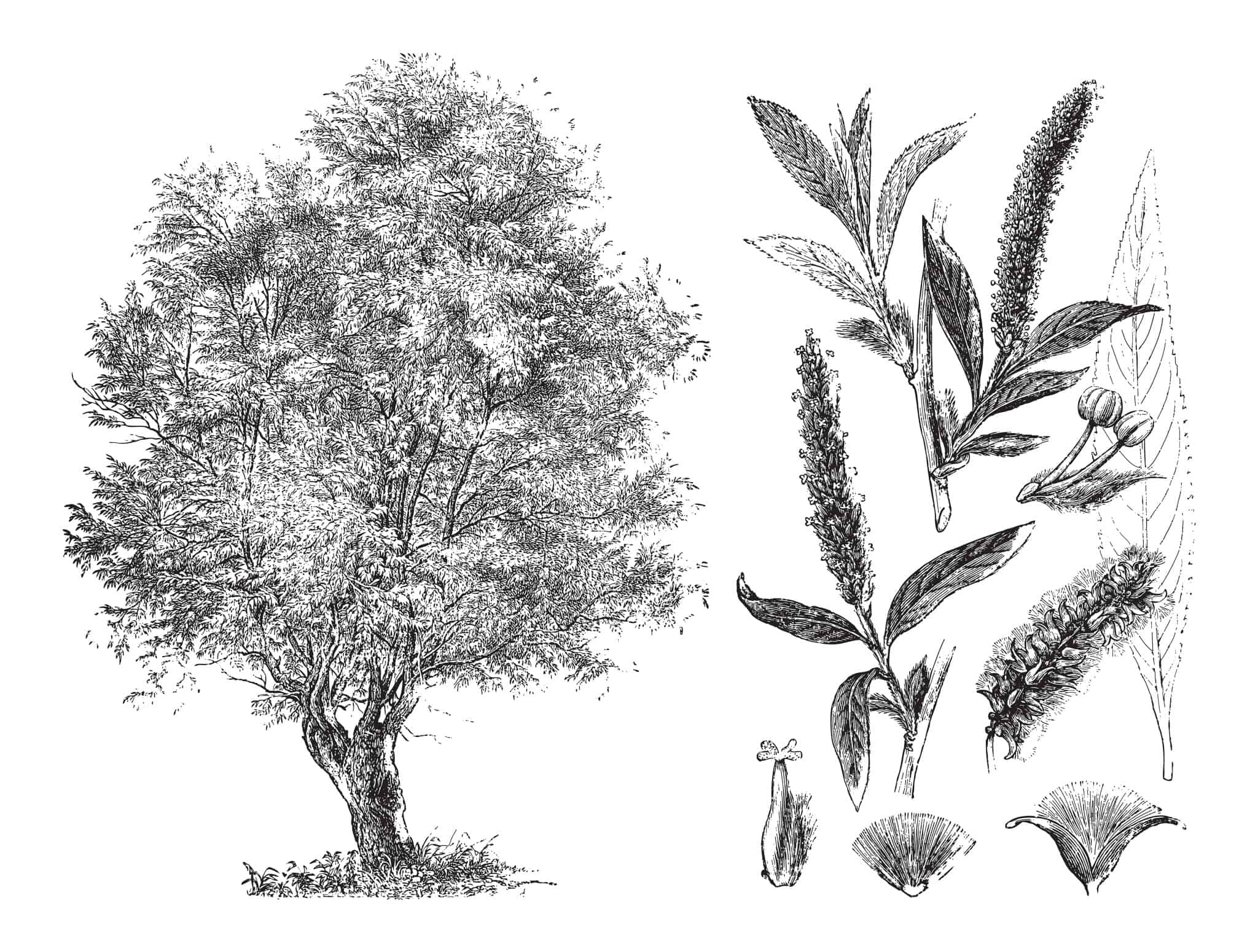
Plant life: White willow

White willow prefers damp ground and is often found near water.

Moth caterpillars including the puss moth and eyed hawk moth feed on the long slim leaves and the catkins are a source of pollen and nectar for bees.

Male and female flowers are produced on different trees and pollination takes place by insects.

The silky hairs on the leaves can make them appear silvery-grey.

They grow fast and a small branch cut off and pushed into the ground will root and produce a new tree.

BOOK NOW BOOK NOW