Quick quiz


Results

Well done! It’s the rabbit. Baby rabbits are called kittens, while baby hares are leverets. Rabbits are generally smaller than hares, with shorter ears and back legs relative to the rest of their body. They tend to live in family groups, while hares are more solitary. From top left, clockwise: Hare, mountain hare, hare, rabbit

Bad luck! It’s the rabbit. Baby rabbits are called kittens, while baby hares are leverets. Rabbits are generally smaller than hares, with shorter ears and back legs relative to the rest of their body. They tend to live in family groups, while hares are more solitary. From top left, clockwise: Hare, mountain hare, hare, rabbit

#1. Which of these has kittens?

Previous
Find out

Watch

Where next?

Great spotted woodpecker

Nature Trail 11

Donate now!

Robin

Robins are ferociously territorial and will fight to the death to defend their patch. They do seem to tolerate each other around the bird feeders, but can still be seen – and heard – squabbling. Their pugnacious nature doesn’t seem to extend to humans, who they tolerate quite happily.

It is hard to distinguish between males and females; males may have slightly brighter breasts and a squarer peak on the head, but it is really only during the breeding season that things get easier – if you see one robin feeding another, it is the male that is doing the feeding as part of the courtship. 

Robins are busy breeders and produce up to five broods of four or five eggs a year. Young robins have a speckled brown breast and don’t develop the red feathers until later.

In folklore they are associated with storms Norse mythology they are associated with the thunder god Thor. In British folklore it is deemed extremely bad luck to kill a robin or harm its eggs. 

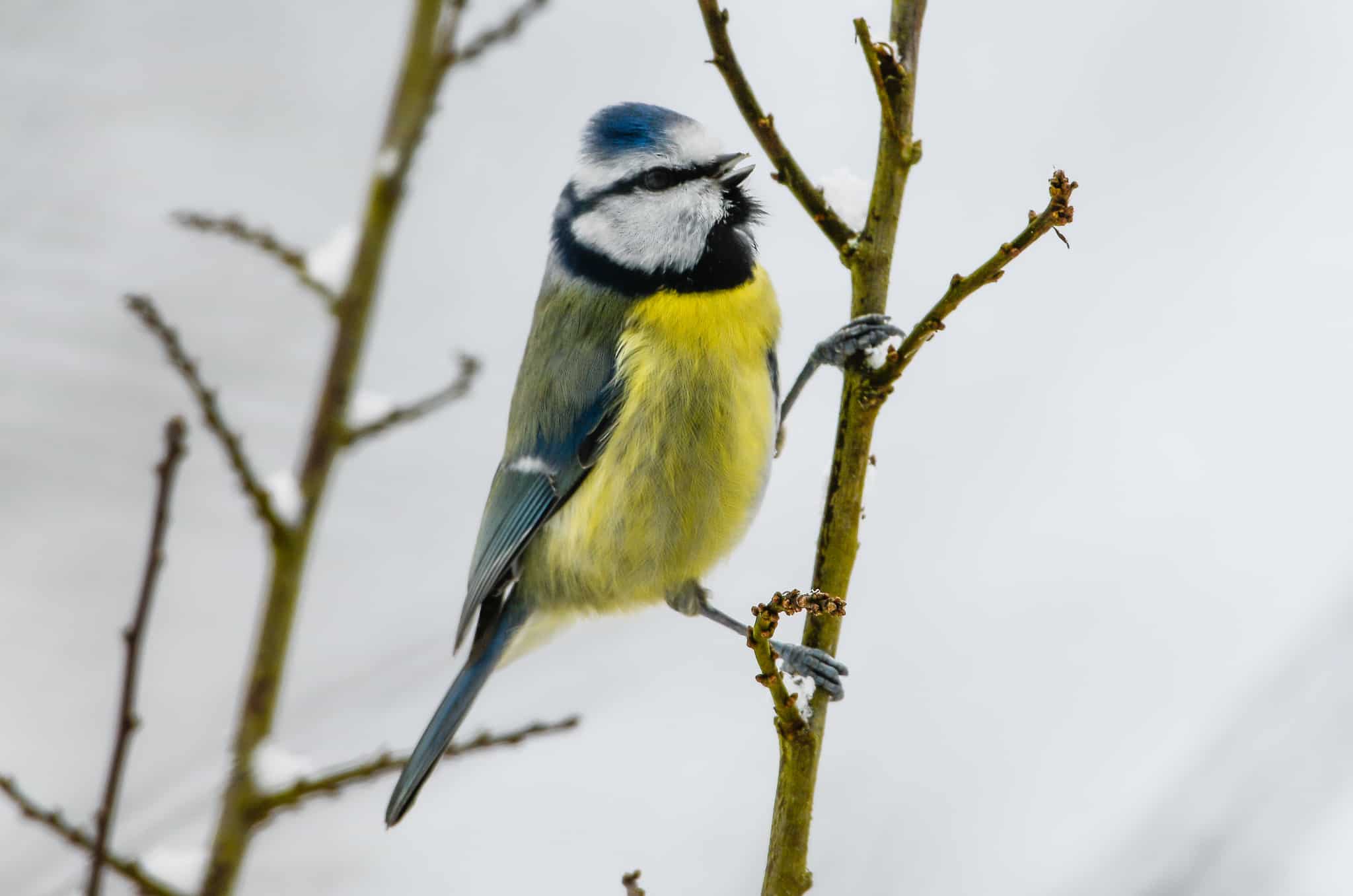
Blue tit

These tiny birds are easy to distinguish, with a blue cap, bright yellow breast and a white face. 

Blue tits can live for up to 10 years – although most live for around three. There are an estimated 3.4 million pairs in the UK.

They use moss, leaves and wool to make a small cup-shaped nest and lay up to 12 eggs at a time.

Blue tits are quite noisy birds and their urgent calls are hard to miss as they dart around looking for insects and spiders. They will also eat seeds and berries, particularly in winter.

Chaffinch

Chaffinches are one of the most widespread birds in the UK and get their name from one of their favourite food sources, chaff – the outer coverings of seeds.

They will use bird feeders but often prefer to pick up seed knocked down onto the woodland floor.

Male chaffinches are strikingly colourful, with a reddish orange breast and face and a blue grey cap

They build round nests from moss, grass and spider webs and chicks fledge (develop their flight feathers) within two weeks of being born.

Great tit

Great tits are noticeably larger than blue tits and can be identified by their black head, green back and yellow breast.

They are quite boisterous and will chase other smaller birds off bird feeders. There are even stories of them eating the brains of hibernating bats.

The name tit is reported to come from an old English word meaning small – though it may also have a Scandinavian origin. 

Great tits have adapted well to climate change and have brought forward their egg laying to capitalise on caterpillars which have emerged early due to warmer weather. As a result great tit numbers have doubled since the 1960s.

Siskin

Siskins are members of the finch family. The males have yellow and green bodies with black caps and bibs and a forked tail, while the females lack the black cap and bib.

They eat seeds and are found particularly among pines, alders and birch.

There are around 400,000 pairs in the UK and they are a common sight on bird feeders, where they eat at a leisurely pace.

Plant life: Common oak

Pedunculate oaks are deciduous trees which can grow up to 40 m high and live for more than 500 years.

They bear their familiar lobed leaves on very short stems, with two small lobes at the base.  The fruit – the acorn – is carried on a longer stem. Their leaves appear a couple of weeks before those of sessile oaks.

Pedunculate oaks are also know as common oak or English oak.

Oaks are actually part of the beech family, Fagacea.

BOOK NOW BOOK NOW